.svg)

.webp)


Oops! Something went wrong while submitting the form.
.webp)
A practical framework for turning a good system into a real operational change
The ClickUp build is finished. The folders make sense, the statuses are clean, the dashboards are live, and everyone sat through the training call.
Then Monday arrives.
Someone asks for a project update in Slack. Someone keeps a private spreadsheet just to be safe. Someone prints the task list and checks things off by hand. The old way feels easier, and for now, it still wins.
This is the part most rollout guides never get to. Getting a team to genuinely adopt a new system is a behavior problem, and it does not get solved by sending another reminder to update their tasks.
When a new tool goes live, the instinct is to schedule training. Walk everyone through the features, answer questions, record the session for anyone who missed it. Done.
But training teaches people where to click. It does not change the way they actually work.
Research on organizational change is consistent on this: knowledge of the tool is only one piece of adoption. Without the right context, motivation, and reinforcement around it, the training fades fast.
The team learns the tool, returns to real work, and within two weeks the Slack messages are back. ClickUp becomes the place where work gets documented after the fact, not where it actually happens. According to research by 1E, companies waste an average of 38% of their software budget on tools that are unused or rarely used. In many cases, the tool was never the problem.
🔗 Related Read: How to Effectively Train Your Team
A system rarely outlasts the habits of the people leading the team.
People are observant. They notice where decisions get made, where status updates live, where approvals happen. If the manager keeps asking for updates over Slack, the team reads that as the real channel. If the founder receives deliverables by email, the team understands that email still counts. If ClickUp is where things get logged after the meeting, but not where the meeting references come from, the team understands ClickUp is for record-keeping, not for working.
Most leaders are not trying to undermine the system. They are busy, they have their own habits, and some of their teams have already watched previous tools come and go. That history matters.
McKinsey's research on organizational transformation identifies four things that drive behavioral change at scale: leaders modeling the new behaviors themselves, building the skills people need to change, reinforcing the change through structures and expectations, and creating real conviction about why the change matters. The order matters. Modeling comes first. If leadership has not made the shift, the team is watching a mixed signal.
The team follows where leadership actually works, not where leadership says to work.
📕 Related Read: ClickUp to Manage Employees and Freelancers
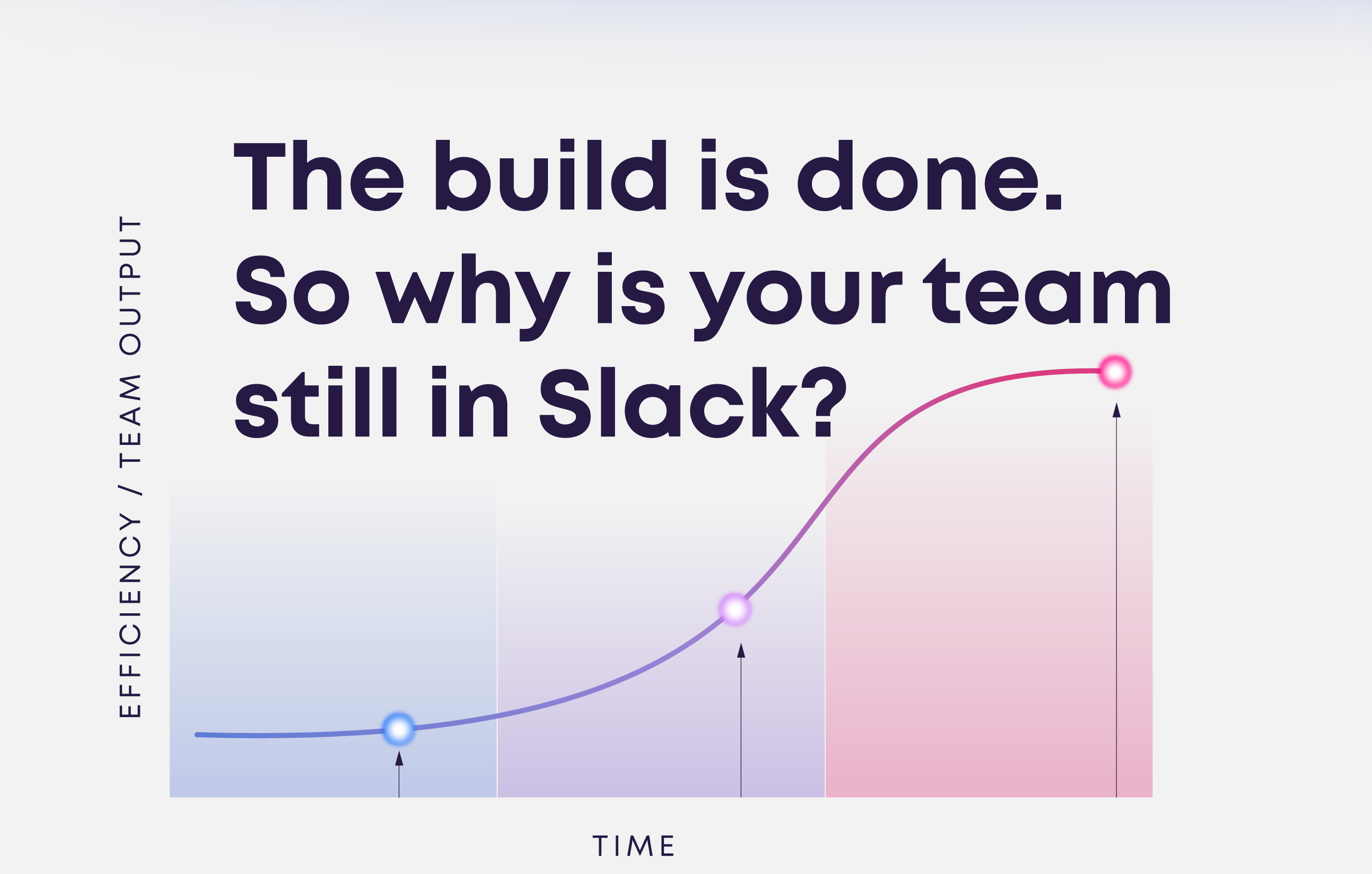
There is a well-documented pattern in how teams adopt new technology. It is called the S curve, and it is worth understanding before you launch anything.

In the early phase, things slow down. The team is learning a new system on top of doing their real jobs, so tasks take longer, questions increase, and some people get frustrated. This is the moment when leadership is most tempted to conclude the system is not working.
Then something shifts. People start finding things without asking. They can see project status without scheduling a call. The new way starts to feel less like effort and more like clarity.
After that tipping point, the gains compound. Less time on status updates, fewer dropped handoffs, less depending on one person to know where everything stands.
The teams that abandon a rollout during the early friction phase never get to experience what the system was built to do. They conclude it did not work based on evidence gathered during the hardest part of the transition. Understanding the S curve matters because it changes how leadership reads that early phase. What looks like failure is usually just the beginning of the curve.
The job of leadership is not to eliminate that friction. It is to normalize it.
🔗 Related Read: How to Build a Self-Managing Team Using ClickUp
The most effective rollouts treat adoption as a project in itself, not a byproduct of setup and training.
Start by asking the team what is hard about the way things work right now. Not "what do you think about the new tool" but "what takes too long, what gets lost, what do you have to do twice." This does two things: it surfaces real workflow problems the new system needs to solve, and it makes the team part of the diagnosis instead of recipients of a decision.
From there, map the parallel channels. Where does work actually happen today? Which Slack groups, email threads, spreadsheets, and shared drives are doing the job ClickUp is supposed to do? The rollout needs to account for all of them, not just assume people will migrate on their own.
Identify who is likely to resist and why. Some people are early adopters who will make the transition easy. Others have deep habits, high stakes in the current system, or real concerns about losing visibility. Knowing who they are before launch means you can address their specific friction points directly.
Build the SOPs and training materials before anyone touches the live system, tied to how this specific team does its specific work, not generic tutorials.
🔗 Related Read: What a Good SOP Actually Looks Like for a Growing Agency
Train with real examples from the team's actual workflow, not hypothetical tasks. Show how the client onboarding process works in ClickUp, not how tasks work in theory.
Use ClickUp during the launch meeting itself. Open the dashboard. Reference a live list. Demonstrate that the system is already where the work lives, not where it will eventually live.
Leave space for confusion and correct it without blame. The first two weeks will surface things the setup did not anticipate. That is normal and useful. The goal is to fix the friction points quickly so the team does not conclude the system is the problem.
Measure adoption by looking at where work is actually happening, not just login rates. The real signals are whether updates are living inside tasks, whether meetings reference the system, whether status questions are going away.
Hold light weekly reviews in the first month. Not to audit the team but to catch friction early and adjust. What is not working? Where are people still going around the system?
Retire the old channels explicitly. Tell the team when something is no longer the way things are done. Ambiguity about which channel is official is one of the most common reasons parallel systems persist.
Celebrate early wins visibly. When someone uses the system well, call it out. When a process that used to take thirty minutes of back-and-forth now takes five because everything is in one place, make sure the team knows that was the point.
🔗 Related Read: How to Implement a New Project Management Tool in Your Agency
You know adoption is happening when the team consults ClickUp before asking a question in Slack. When updates live inside tasks because that is where they belong, not because someone asked. When a new project kicks off and the first instinct is to build it in the system, not in a Google Doc that will get pasted in later.
The signs that go deeper: the manager can see the status of a client project without scheduling a call to ask. Someone leaves for a week and the work keeps moving.
Onboarding a new team member takes days instead of weeks because the processes are documented inside the tool that runs the work.
Real adoption is when the system stops being the place where work gets recorded and starts being the place where work happens.
Getting a team to adopt a new system is an operational change problem. Many companies treat it as a training problem, which is why so many rollouts look successful on paper and feel incomplete in practice.
The work we do at Stackset is built around that distinction. A good ClickUp build matters. So does what comes after it.
If that gap feels familiar, we would love to talk.



.webp)
.webp)


.webp)

