.svg)

.webp)
.webp)
.png)
Oops! Something went wrong while submitting the form.
Here's an uncomfortable stat: Gallup puts global employee engagement at just 21%. Yet most managers don't catch a morale problem until the resignation letter lands. By then the decision's already made.
The reason isn't bad management. It's that the signals are scattered. A clipped reply in Slack, a deadline that slips, someone who's gone quiet in channels they used to own, each one is noise on its own. Spread across email, chat, and a dozen tabs, they never add up to a pattern you can actually see.
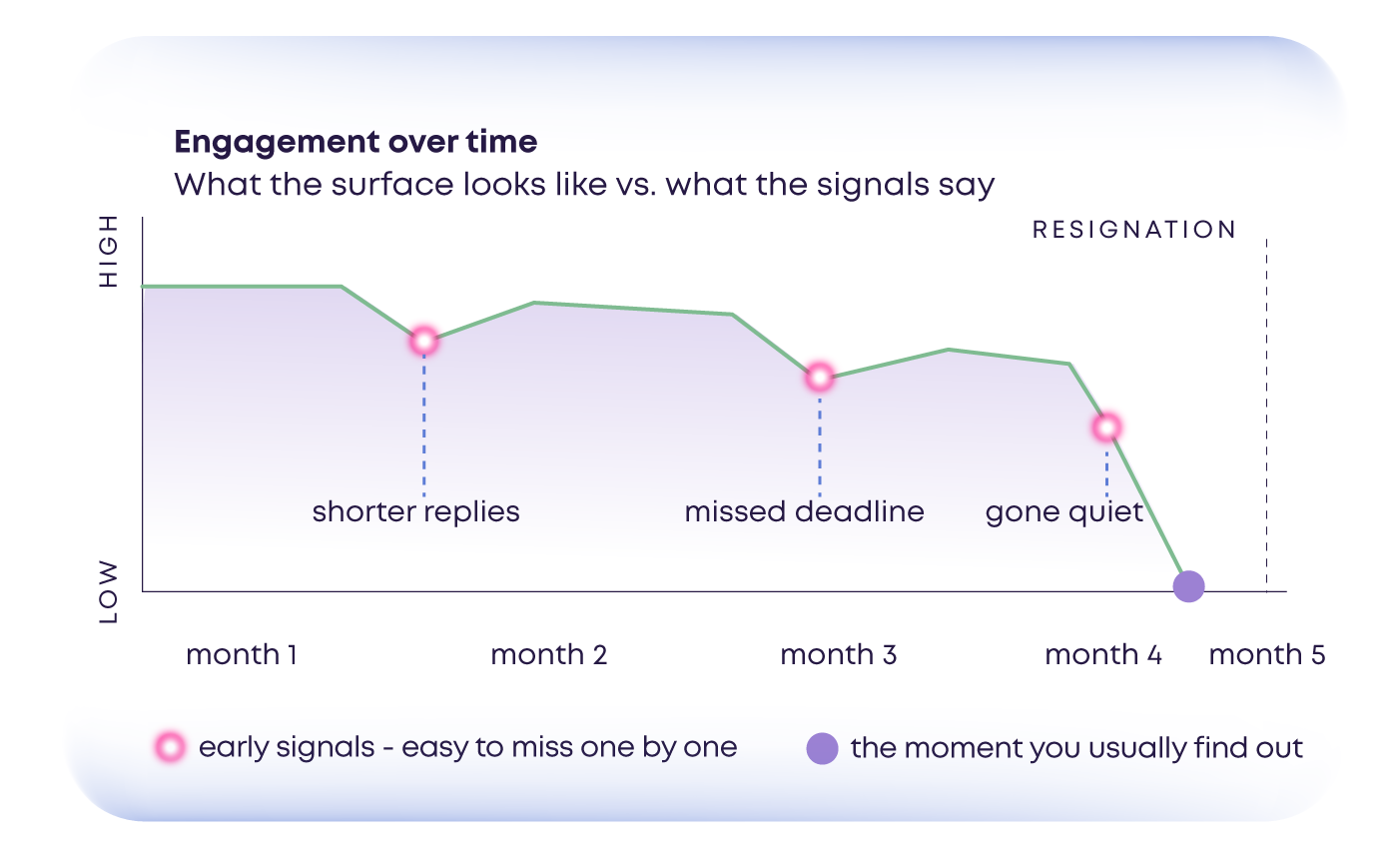
Think of it less as surveillance and more as pattern detection. AI reads across your team's everyday work signals and flags shifts you'd otherwise miss — not to hand you a verdict, but to give you a reason to check in before a small thing becomes an exit.
It works on two fronts:
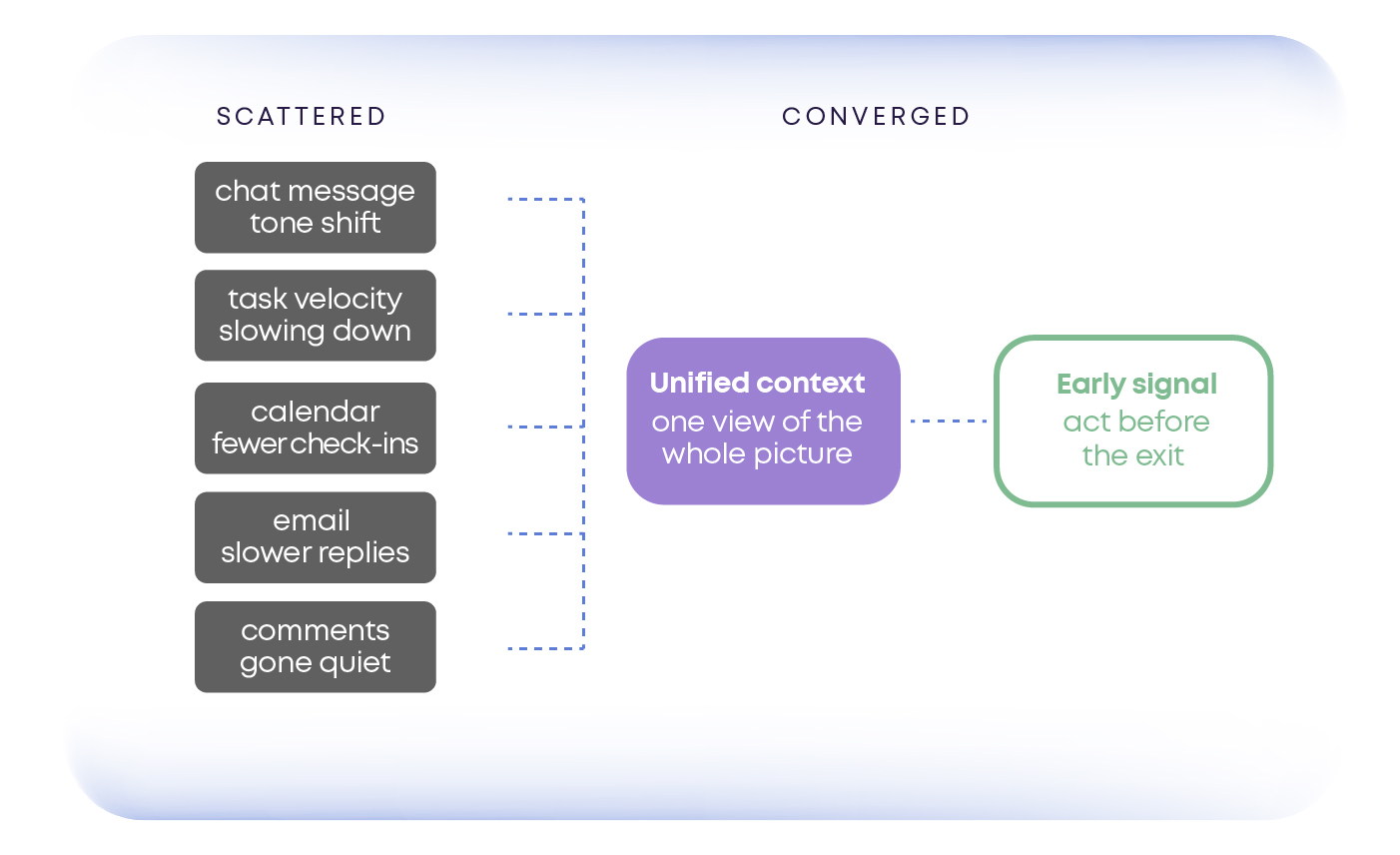
Stack those together and you can forecast retention risk, essentially an early-warning score for who might be drifting toward the door. But it's a prompt for a conversation, never a confirmed diagnosis.
This only works if the AI can see the whole picture. Without knowing a deadline was brutal or a project was genuinely hard, it'll read normal pressure as a crisis — or miss a real problem buried in a casual thread. That's the core limitation, and it's why scattered tools undermine the whole exercise.
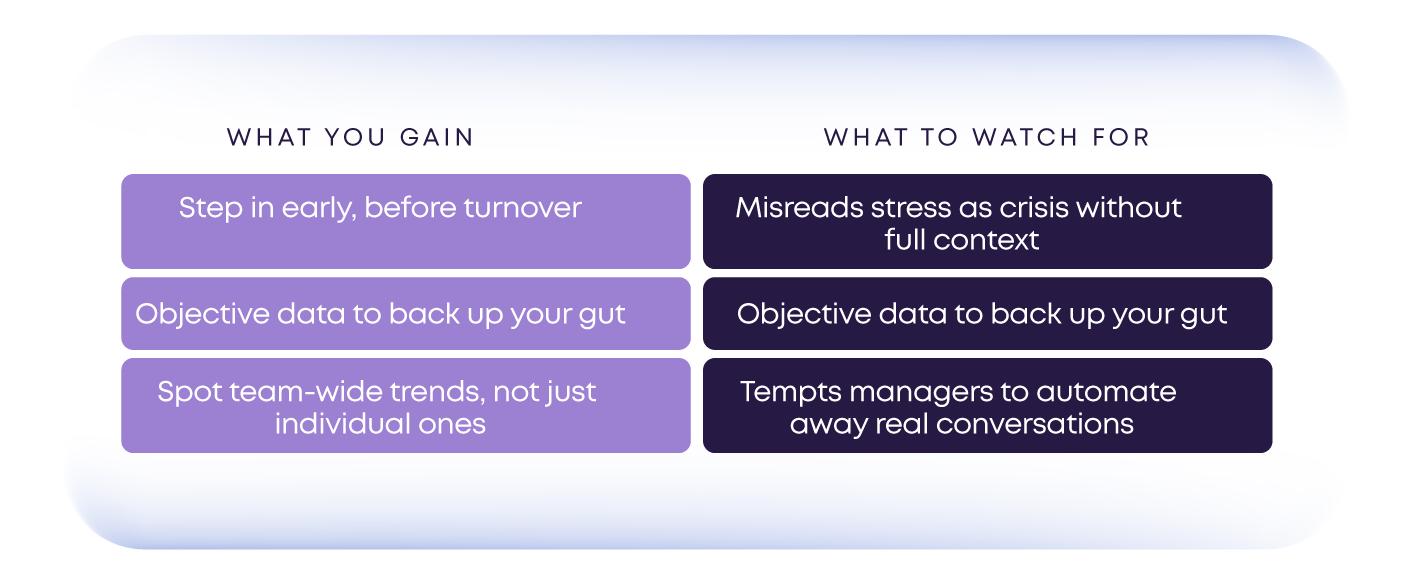
The upside only shows up when two things are true: the AI has enough context to be accurate, and a human follows up with actual care. The tool surfaces the signal. You still have to be the manager.



.webp)
.webp)


.webp)

